
News
JI Steel is committed to research & development, and providing a range of high quality,
innovative, cost-effective products and solutions for steel plant.
Improving Steel Flow Control: The Role of Ladle and Tundish Nozzles
2026.10.10
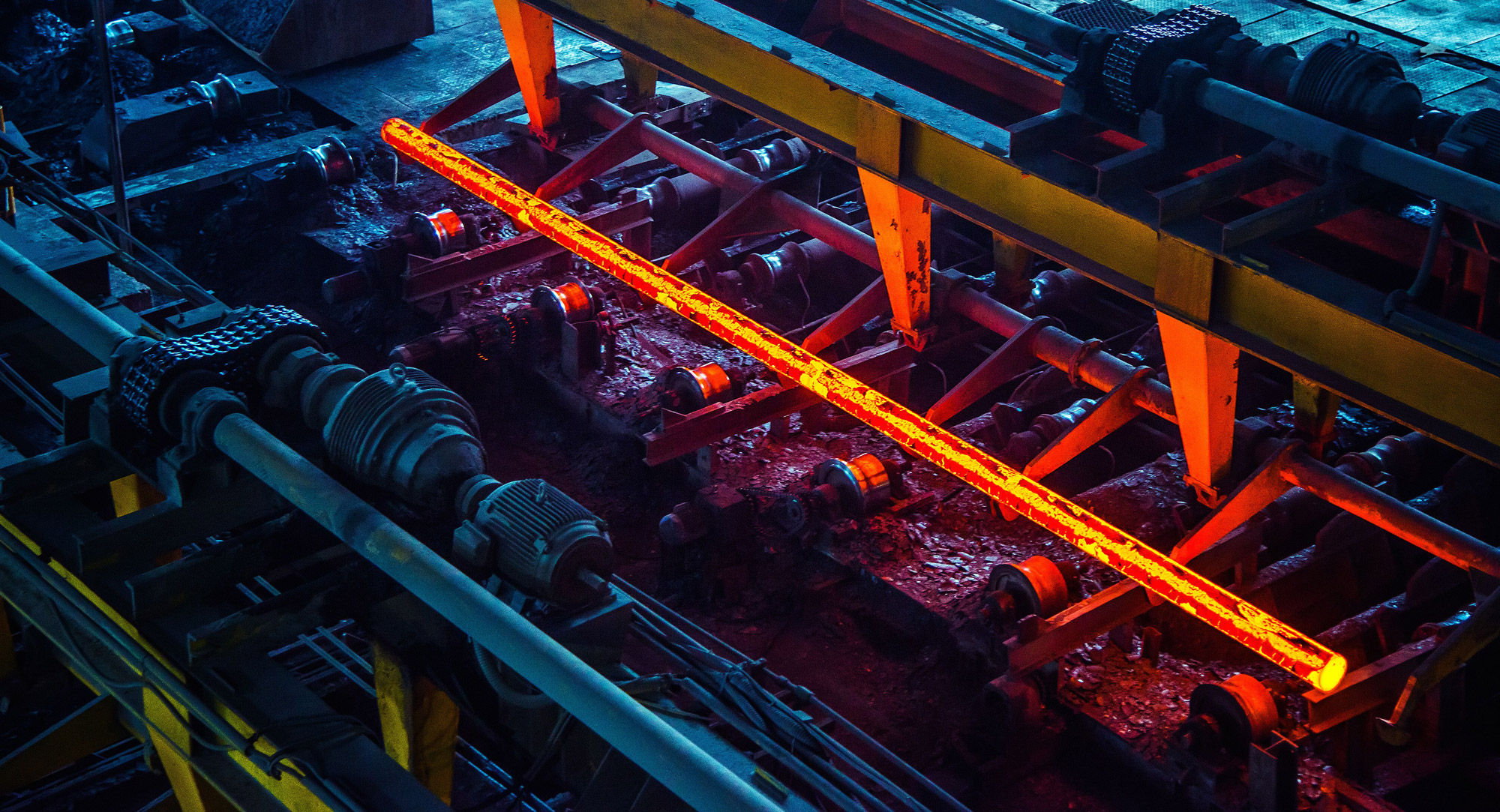
In steelmaking and continuous casting, stable molten steel flow is essential for maintaining production efficiency and consistent steel quality. Ladle upper nozzles, ladle lower nozzles, and tundish nozzles each play an important role in the steel flow control system.
Different Nozzles, One Production Goal
Ladle Upper Nozzle
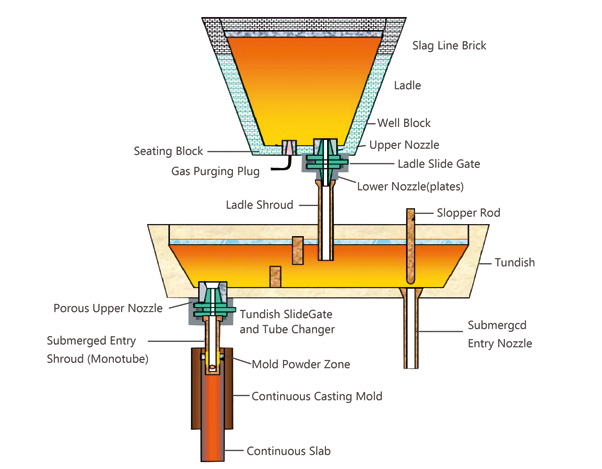
Installed in the upper part of the ladle bottom flow-control assembly, the ladle upper nozzle helps guide molten steel toward the lower nozzle. Its dimensional accuracy and resistance to thermal shock are important for reliable operation.
Ladle Lower Nozzle
The ladle lower nozzle directly guides molten steel from the ladle into the next stage of the casting process. Resistance to erosion, corrosion, and high-temperature conditions is critical to maintaining stable steel flow.
Tundish Nozzle
Tundish nozzles regulate the flow of molten steel from the tundish into the continuous casting mould. Suitable nozzle design and material selection help support stable casting conditions and reduce the risk of flow-related interruptions.
Why Compatibility and Consistency Matter
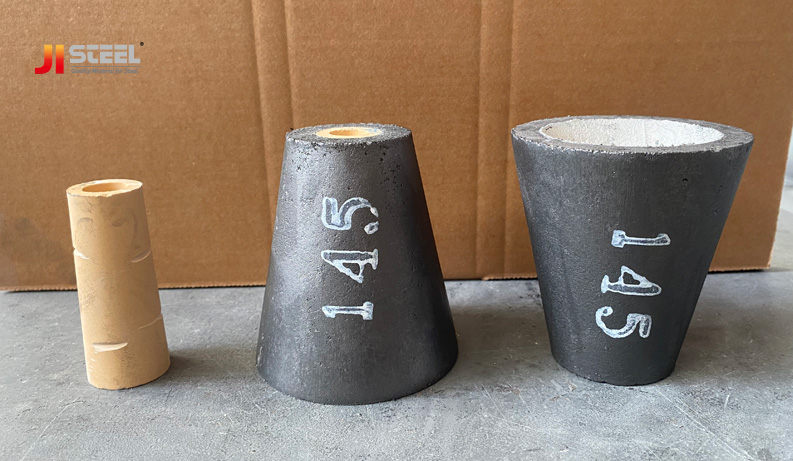
Although ladle upper nozzles, ladle lower nozzles, and tundish nozzles serve different functions, their performance is closely connected throughout the casting process. Differences in dimensions, material properties, or service life can affect flow stability and increase the risk of unexpected interruptions. Selecting compatible refractory components and maintaining consistent product quality can help steel plants improve operational reliability, reduce unplanned downtime, and achieve more efficient continuous casting. For this reason, nozzle selection should consider not only the performance of individual components but also the requirements of the entire molten steel flow system.
Choosing the Right Nozzle Materials
Operating temperature, steel grade, casting duration, slag conditions, and required service life should all be considered when selecting nozzle products. Proper installation and routine inspection are also essential for safe and reliable performance.
JISteel supplies metallurgical materials and equipment for steelmaking and continuous casting applications. We work with customers to identify suitable nozzle solutions based on their operating conditions and technical requirements.