
News
JI Steel is committed to research & development, and providing a range of high quality,
innovative, cost-effective products and solutions for steel plant.
Graphite Electrodes: Production, Application and Technological Development
2025.11.6
Graphite electrodes are essential consumables in electric arc furnace (EAF) steelmaking and other high-temperature metallurgical processes. As global EAF steel output continues to rise, the demand for high-performance electrodes is steadily increasing. This article provides an overview of production processes, application characteristics, and key industry trends.
01 Production Process and Technical Features
The production cycle of graphite electrodes typically spans 2–3 months and involves several critical stages:
Raw Material Preparation
High-quality needle coke and coal pitch are selected and precisely blended to ensure excellent conductivity, low resistivity, and consistent product quality.
Mixing & Forming
The raw materials are kneaded at high temperature and shaped through extrusion or vibration forming. Uniform forming ensures desirable thermal stability and mechanical strength.
Baking
Green electrodes are baked at 800–1000°C to improve structural density and obtain initial conductive properties.
Impregnation
Electrodes are impregnated with pitch under vacuum and pressure, enhancing density and mechanical strength. This process is typically carried out 1–3 times.
Graphitization
At temperatures of 2800–3000°C, the material transforms into graphite. This stage determines key properties such as electrical conductivity, thermal expansion coefficient, and thermal shock resistance.
Machining & Nipple Manufacturing
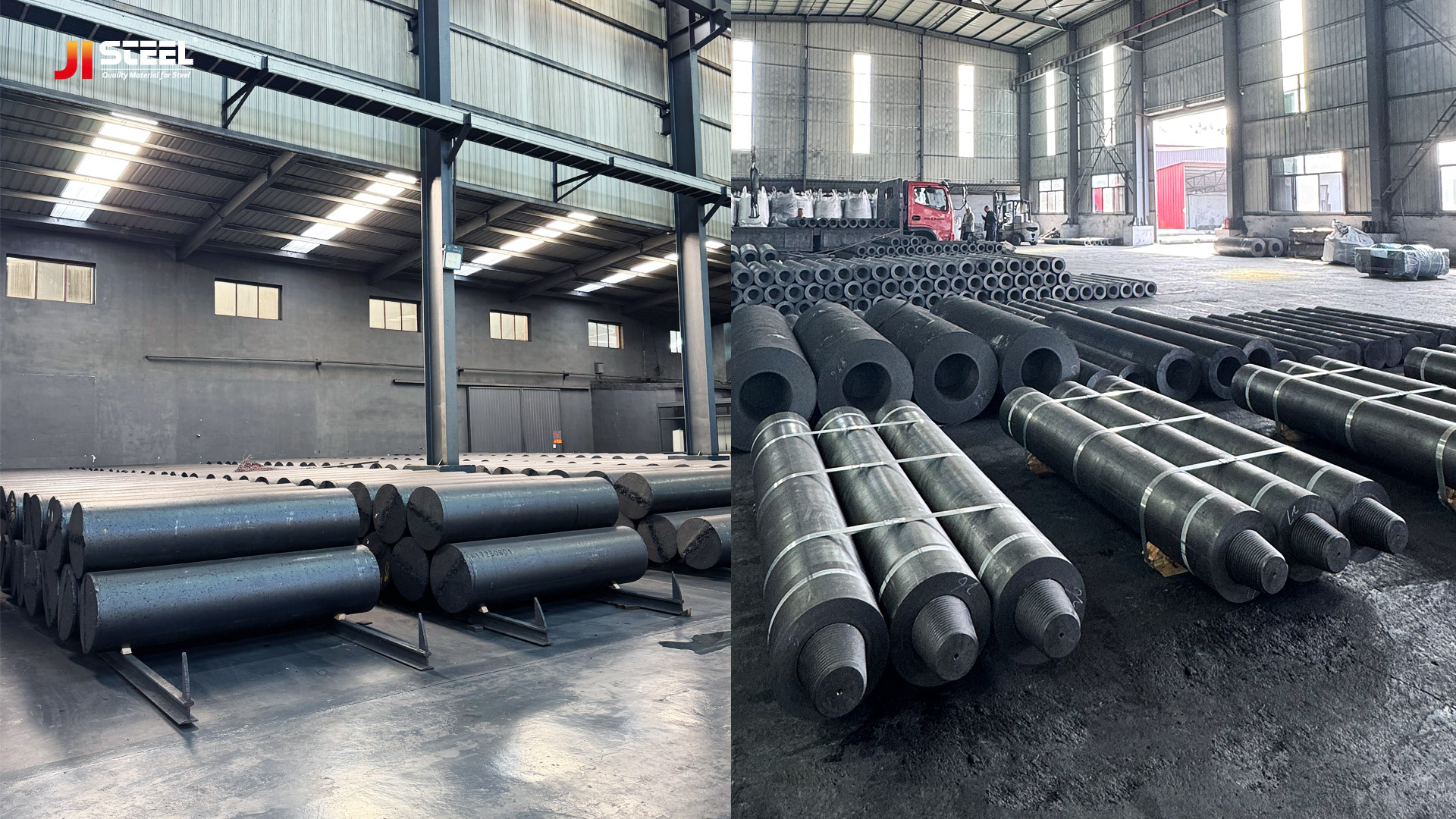
Electrodes are machined to precise dimensions and equipped with threaded nipples to ensure stable electrical connection during use.
02 Application Characteristics in EAF Steelmaking
Electric arc furnaces are the primary application field for graphite electrodes. Key characteristics include:
● Core Conductor and Heat Source
Electric arcs generated between the electrodes can exceed 3000°C, serving as the main heat source for melting scrap steel.
● Continuous Joining and Operational Reliability
During steelmaking, electrodes must be continuously connected. The quality of the nipple determines current stability and the risk of breakage.
● Consumption Directly Affects Production Cost
Electrode consumption—oxidation loss, end loss, and breakage—has a significant impact on EAF operating cost.
03 Technological Development Trends
With the global shift toward electric furnace steelmaking, the graphite electrode industry is evolving along several trends:
1.Growing Demand for UHP Electrodes
Ultra-High-Power (UHP) electrodes provide superior conductivity, lower consumption, higher mechanical strength, and excellent thermal shock resistance, making them the mainstream choice for modern EAFs.
2.Optimization of Needle Coke and New Carbon Materials
Industry efforts focus on improving needle coke supply, modifying coal-based materials, and applying advanced high-purity carbon materials to enhance performance.
3.Digitalization and Automation in Manufacturing
Smart batching systems, energy monitoring, and digital graphitization control enhance production efficiency and product consistency.
4.Increased Use of Anti-Oxidation Coatings
Surface coating technologies reduce oxidative consumption and help extend electrode service life.
5.Rise of Life-Cycle Management Services
Steelmakers increasingly value electrode performance data and application guidance. Suppliers are shifting from product sales to full-solution services.
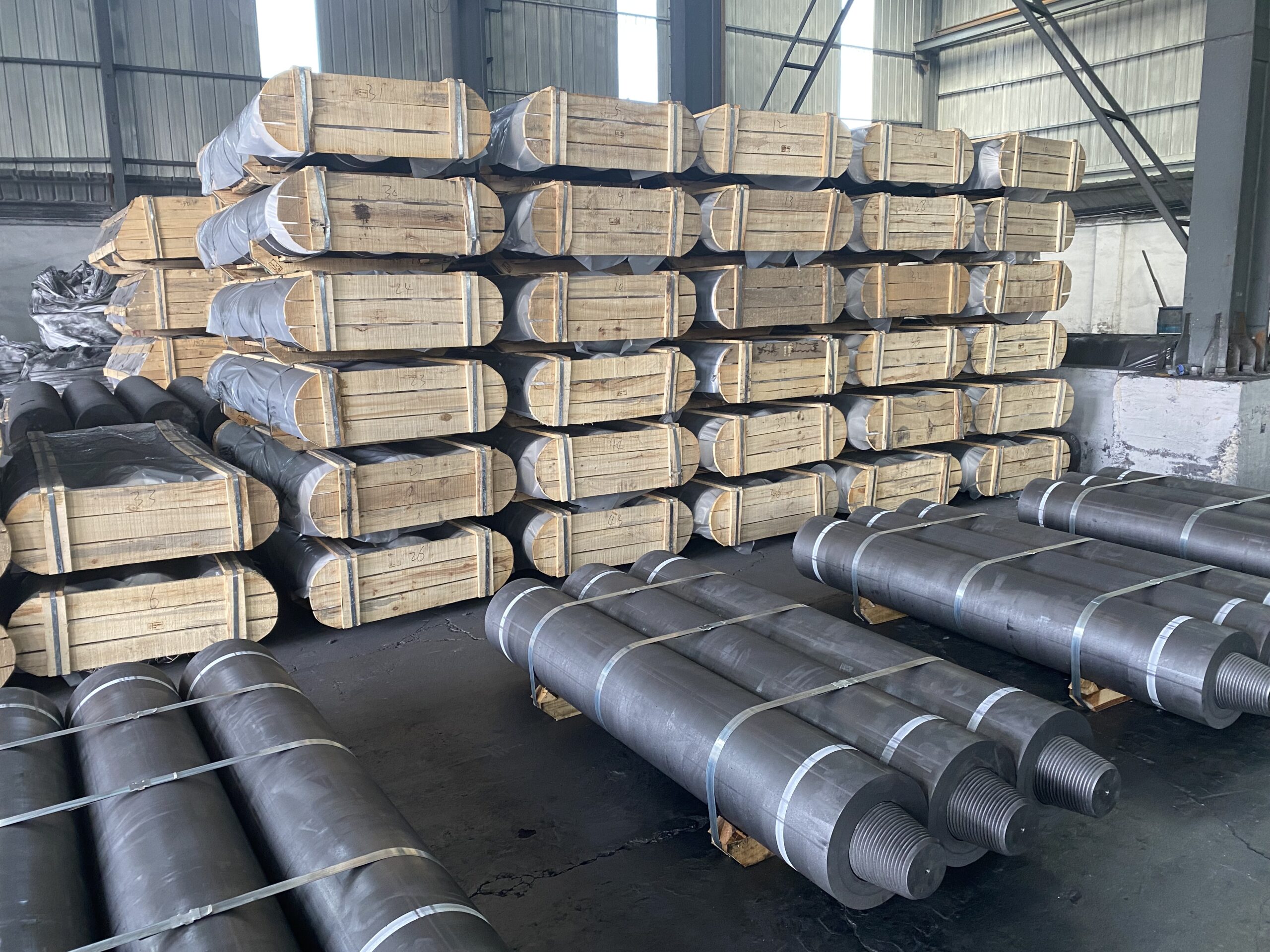
As global EAF steelmaking capacity expands, the graphite electrode sector is advancing toward higher performance, improved stability, and lower energy consumption. These developments will continue to support more efficient and sustainable steel production.
JISteel Graphite Electrode Services
JISteel provides high-quality graphite electrodes, technical consultation, and application support to help steel plants achieve more stable, efficient, and cost-effective EAF operations.